
Elastic Security
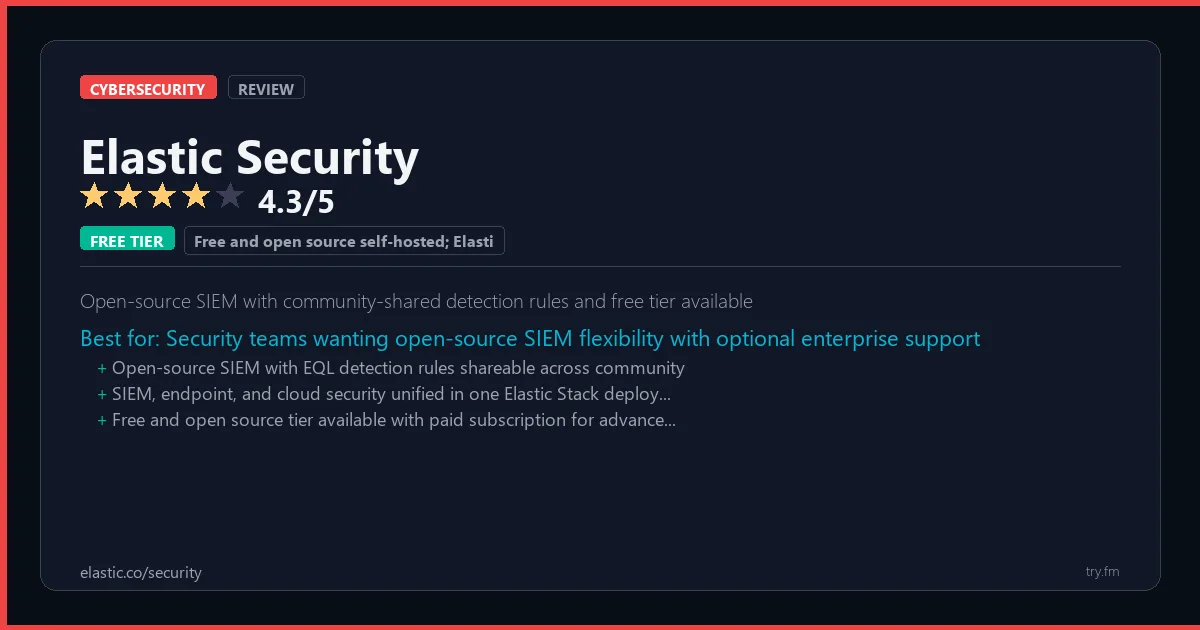
Free and open source self-hosted; Elastic Cloud from $95/mo; Enterprise custom pricing
 Photo by Pixabay on Pexels
What is Elastic Security?
Elastic Security is an open-source SIEM and endpoint security solution built on the Elastic Stack and developed by Elastic NV, headquartered in Mountain View, California. elastic.co/security provides SIEM, endpoint protection, and cloud security in a unified platform powered by Elasticsearch's speed and scale. As a free and open solution, Elastic Security enables teams with any budget to deploy enterprise-grade threat detection without licensing costs for the core stack. With 1,000+ prebuilt detection rules aligned to MITRE ATT&CK and a machine learning-powered threat detection engine, Elastic is a compelling Splunk alternative.
Visit https://elastic.co/security to learn more or start your free trial.

47 Things You Should NEVER Tell ChatGPT
Sensitive data shared with an AI tool can be hard to take back. Are you one of them?
We respect your privacy. Unsubscribe anytime.
Key Features
- Free and open SIEM built on Elasticsearch
- 1,000+ prebuilt MITRE ATT&CK detection rules
- Endpoint security with Elastic Agent
- Cloud security posture management
- AI-powered attack discovery and investigation
- Scalable to petabyte-scale log ingestion
Getting Started with Elastic Security
Here is how to start using Elastic Security today, step by step.
- Visit the website - Go to https://elastic.co/security and click the sign-up button.
- Create your account - You can sign up for the free tier without entering a credit card. This gives you access to the basic features right away.
- Explore the dashboard - Once you are in, take 5 minutes to look around. Most cybersecurity tools have a tutorial or onboarding flow that shows you the basics.
- Try the core feature - Start with: Free and open SIEM built on Elasticsearch. This is what most people use Elastic Security for. Spend 10 minutes trying it out to get a feel for how it works.
- Check the limits - If you are on a free tier, check what limits apply so you know when it makes sense to upgrade.
Pro Tips for Elastic Security
- Start with the free tier - The free tier is usually enough for personal use and small projects. Only upgrade when you hit a specific limit that blocks your work.
- Use keyboard shortcuts - Most cybersecurity tools have keyboard shortcuts that speed up your workflow. Look for them in the settings or help menu.
- Check for integrations - Elastic Security probably connects with tools you already use. Check the integrations page to set up time-saving automations.
- Watch tutorials - Search "Elastic Security tutorial" on YouTube for walkthroughs from other users. Seeing how real people use the tool is the fastest way to learn.
- Compare before committing - Before you pay for a subscription, try 2-3 similar tools. Our cybersecurity tools page makes it easy to compare features.
Frequently Asked Questions About Elastic Security
Do I really need Elastic Security?
If you use the internet (and you do), some level of cybersecurity protection is important. Elastic Security helps protect against threats that most people do not see coming - like phishing emails, data breaches, and malware. The free tier is a good place to start.
Will Elastic Security slow down my computer?
Modern cybersecurity tools are designed to run quietly in the background. Elastic Security should not cause noticeable slowdowns during normal use. If it does, check the settings for a lighter scan mode.
Can Elastic Security protect me from all threats?
No single tool stops every threat. Elastic Security handles its specialty well, but a complete security setup also includes strong passwords (use a password manager), two-factor authentication, and keeping your software up to date.

200 Jobs AI Will Replace
Is yours on the list? Find out where your career stands before it's too late.
We respect your privacy. Unsubscribe anytime.
Similar Tools

Snyk
Developer-native security that surfaces and auto-fixes vulnerabilities in the IDE
Try Free Read Review
Hashicorp Vault
Dynamic secret generation creates unique credentials per request that auto-expire
Try Free Read Review
Quad9
Non-profit DNS resolver blocking malicious domains with strict zero-log privacy policy
Try Free Read Review